
As part of our new CELF DAVIES programme, Oriel Davies Gallery's celebration of the remarkable legacy of Gwendoline and Margaret Davies, this small exhibition proposes the book as a work of art.
Bringing together contemporary artists' books and handcrafted publications from Gwasg Gregynog, the exhibition reveals the ways artists, writers and makers have transformed the book into a creative, collaborative medium. Through image, text, typography, form, materials and binding, these works demonstrate how every element of a book can contribute to meaning and artistic expression.
Celebrating both innovation and tradition, the display connects today's artists' book makers with the enduring legacy of Gwasg Gregynog and the Davies sisters' commitment to supporting Welsh art and culture.
The exhibition coincides with the Wales Artists' Book Fair, taking place at Oriel Davies Gallery on 5–6 September.
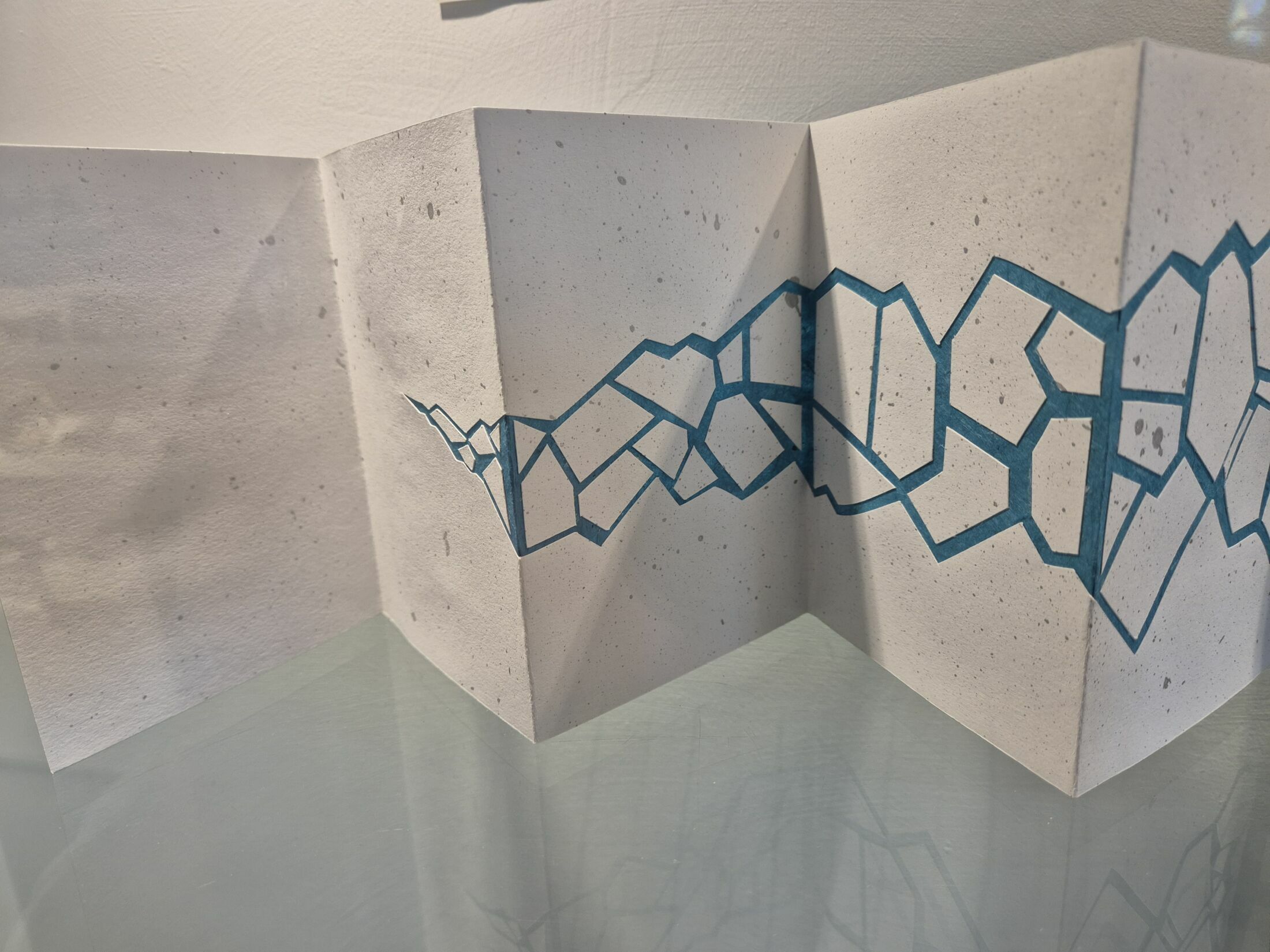
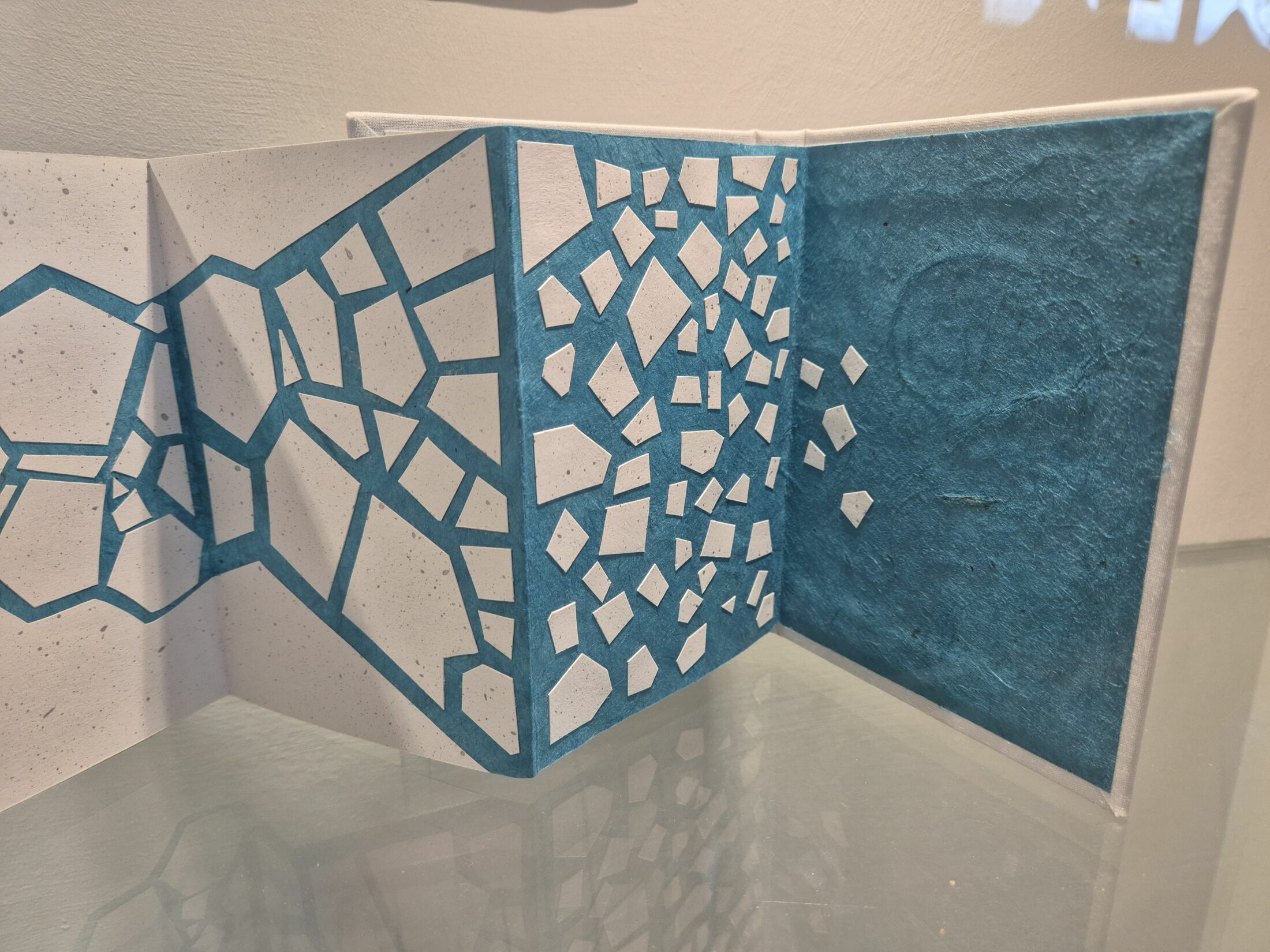
FRACTURE
Isobel Lewis
Fracture is an interpretation of the effects of climate change and the warming seas, particularly in the Arctic where glaciers are melting at an alarming rate. The book is a concertina structure, made using hand cut decorative papers to represent the ice white glacier and the turquoise blue sea. It is housed in a white book cloth slipcase.
Dimmensions: 159 x 115 x 16 mm (closed)
Isobel Lewis publishes her work as The Kelpie Press and uses a variety of printmaking techniques from letterpress and Mokuhanga to cyanotype and Suminagashi to create artist books which reflect her love of typography, colour and pattern. Originally from Scotland but now based in Mid Wales, books by The Kelpie Press can be found in public and private collections in the UK and the USA including The British Library, The National Library of Scotland and The Bodleian Library.
Bound to Nature - Sacred Carbon Connections
Billie Ireland
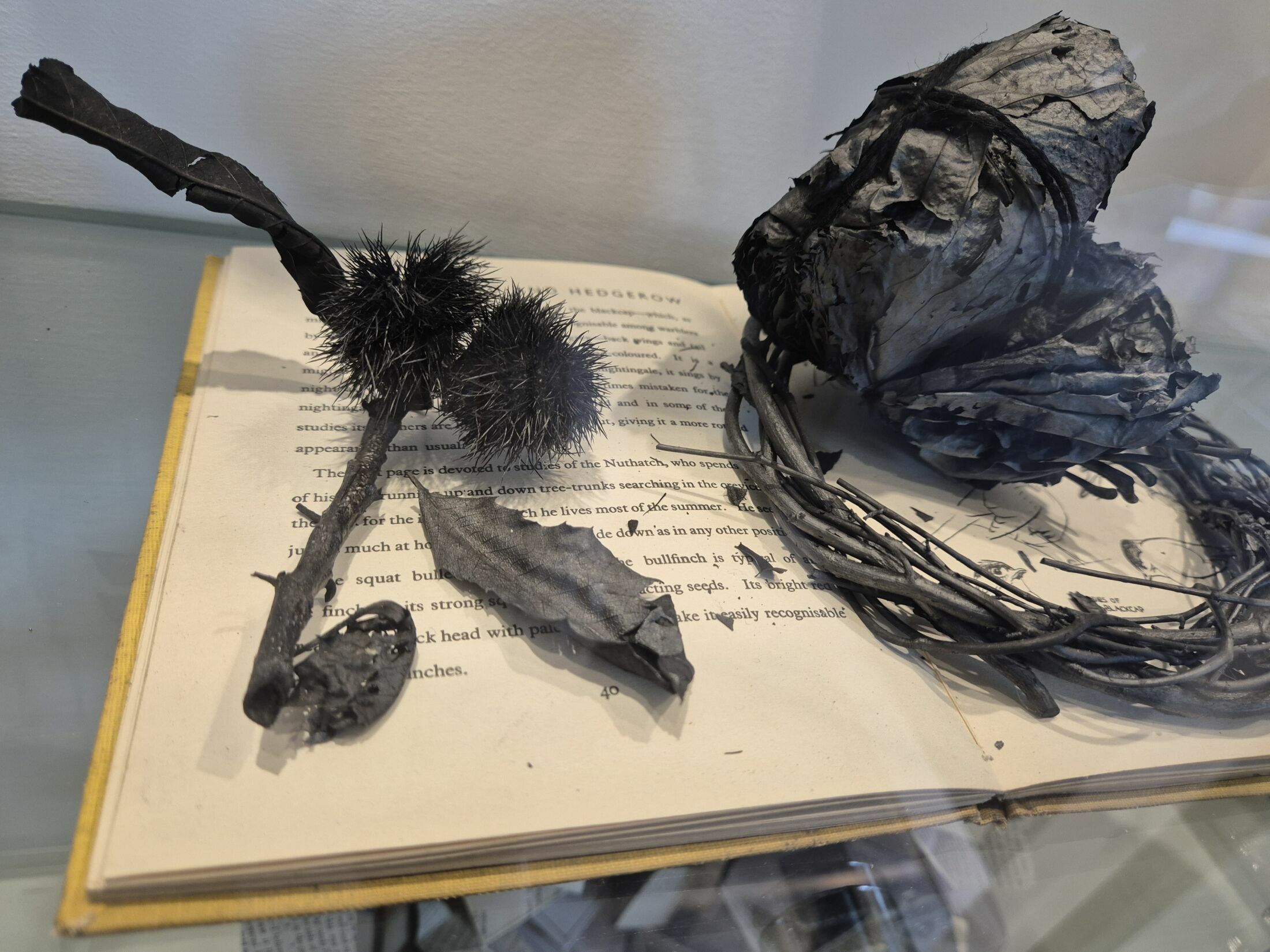
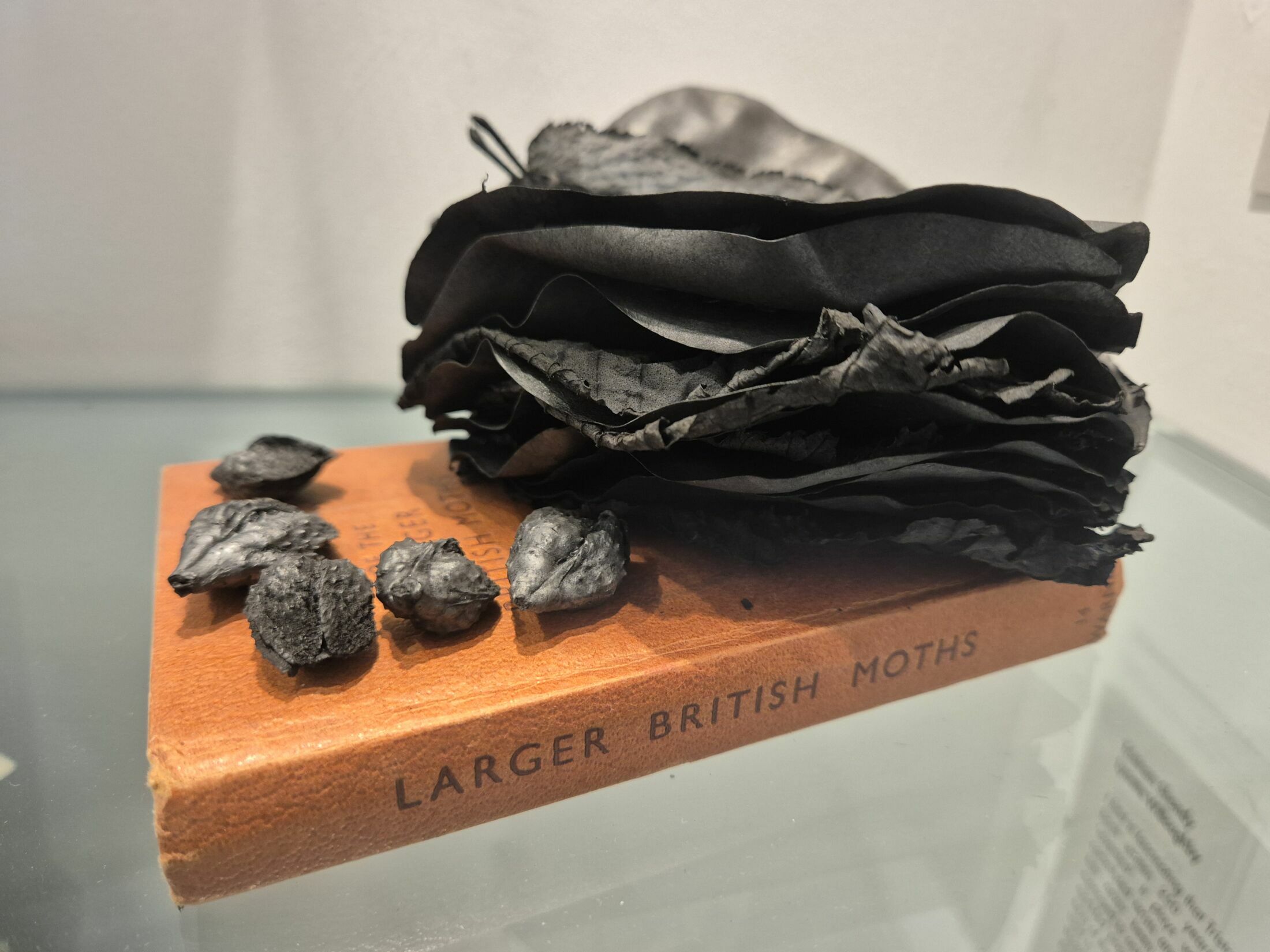
These works are made in the same way as charcoal, heated in the absence of air. This pyrolysis distills the material, leaving nearly pure carbon; the essential building block of life but also the catalyst for human growth and dominance. The Welsh landscape and people hold this industrial legacy like a tome, yet Wales is now the driving force for creative regeneration and climate conscious innovation.
Billie is a research artist working across land art, sculpture and film. She has been researching biochar and pyrolysis with Oxford University and scientists at Imperial College & Co2re the greenhouse gas removal hub. Billie is Wales Maker of the Year, Heritage Crafts UK.
Tristram Shandy
Lynette Willoughby
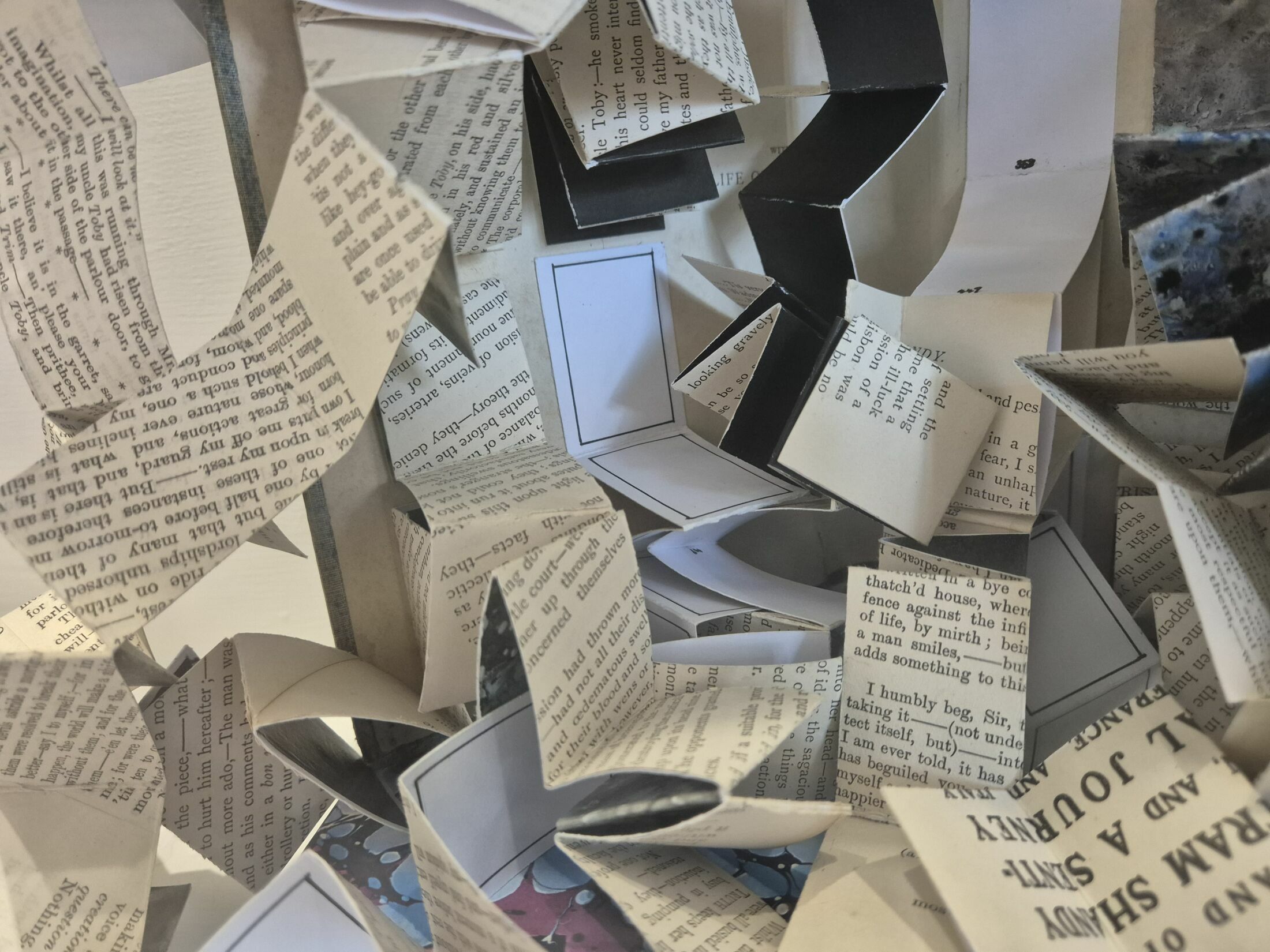
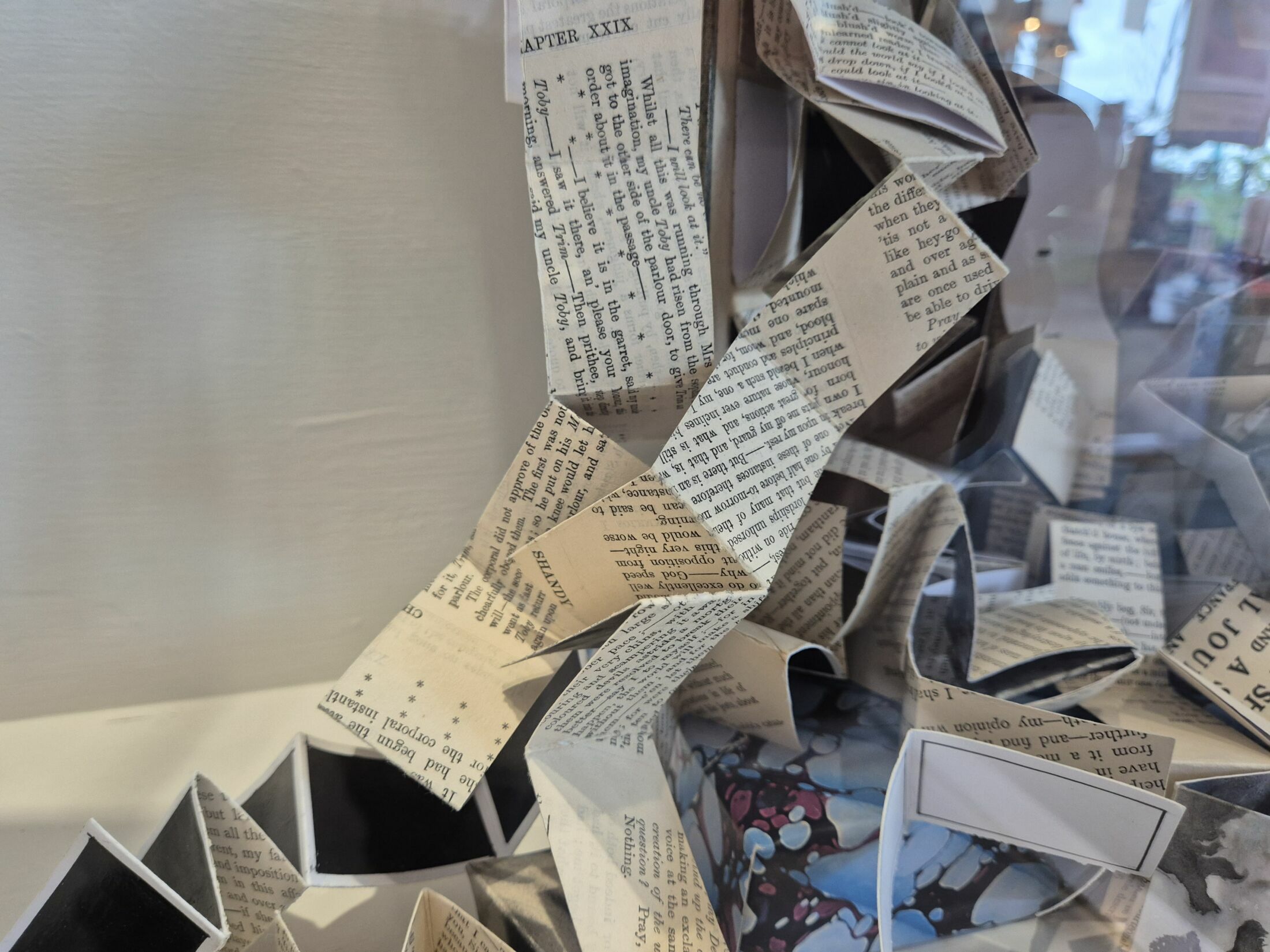
I find it fascinating that Tristram Shandy is a Postmodern book written 250 years before Postmodernism was 'invented'. It plays with structure and plot, making convoluted twists and turns: an explosion of writing. It has never been out of print, despite few having managed to actually read it. It features black, blank, and marbled pages, and diagrams showing the twists and turns of the plot - these striking visual elements have been used in my book which contains little single sheet 'books' showing a black page, a blank page or a marbled page, backed by a page from the original book which explodes out of its cover.
Lynette makes a wide variety of artists books, from simple ones using drawings and calligraphy, to more complex sculptural ones. Her sculptural books often respond to a significant anniversary - the 200th anniversary of the publication of Frankenstein, or the 400th anniversary of Shakespeare’s birth - or may respond to a visit to a significant place - Ruskin’s Brantwood, Laurence Sterne’s Shandy Hall. She often collaborates with Clare Wigzell, a published poet, together responding to artists such as Barbara Hepworth and Turner. Their current project explores the Davies sisters’ donation of Turner’s The Beacon Light.
Gwasg Gregynog
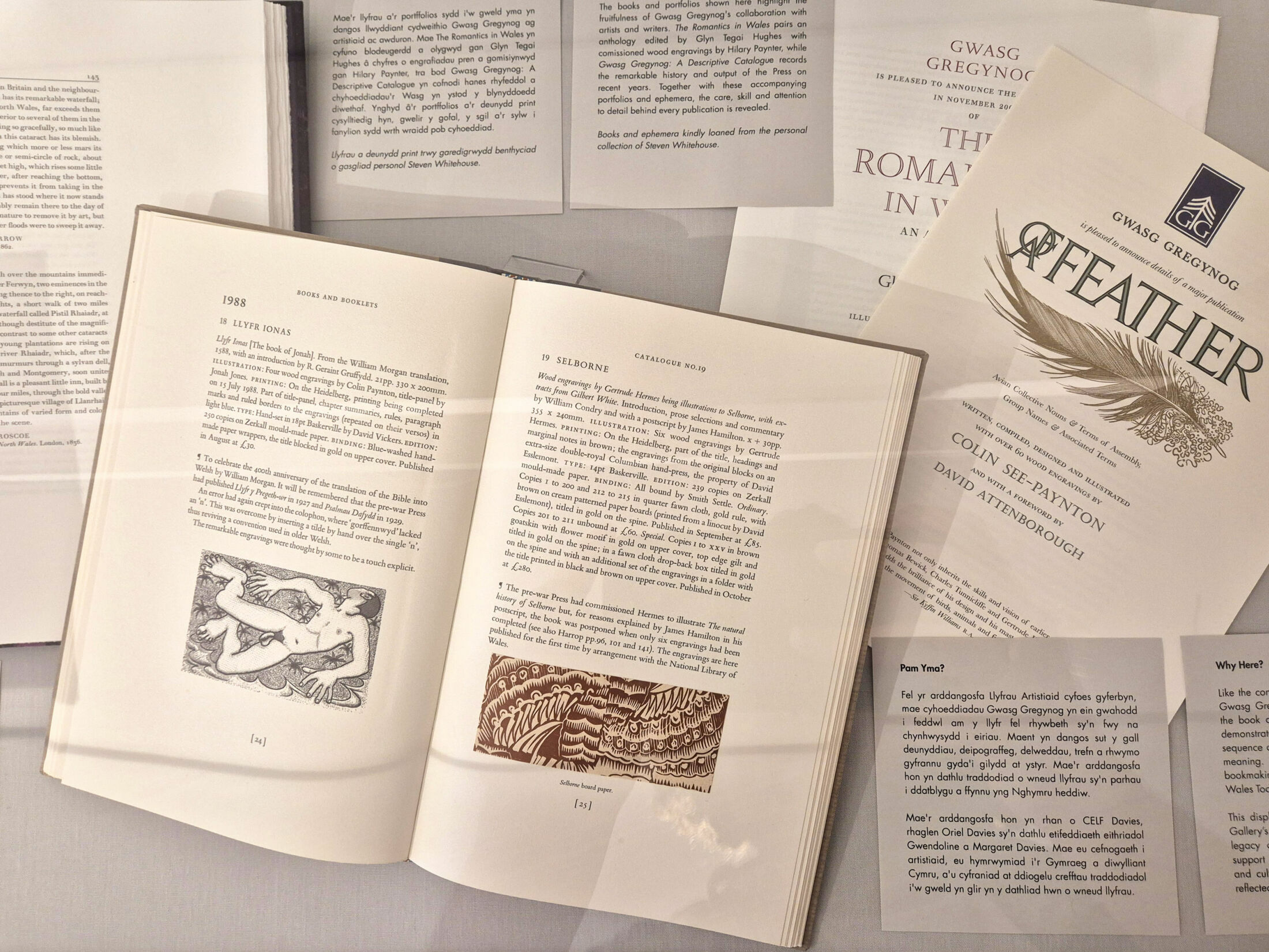
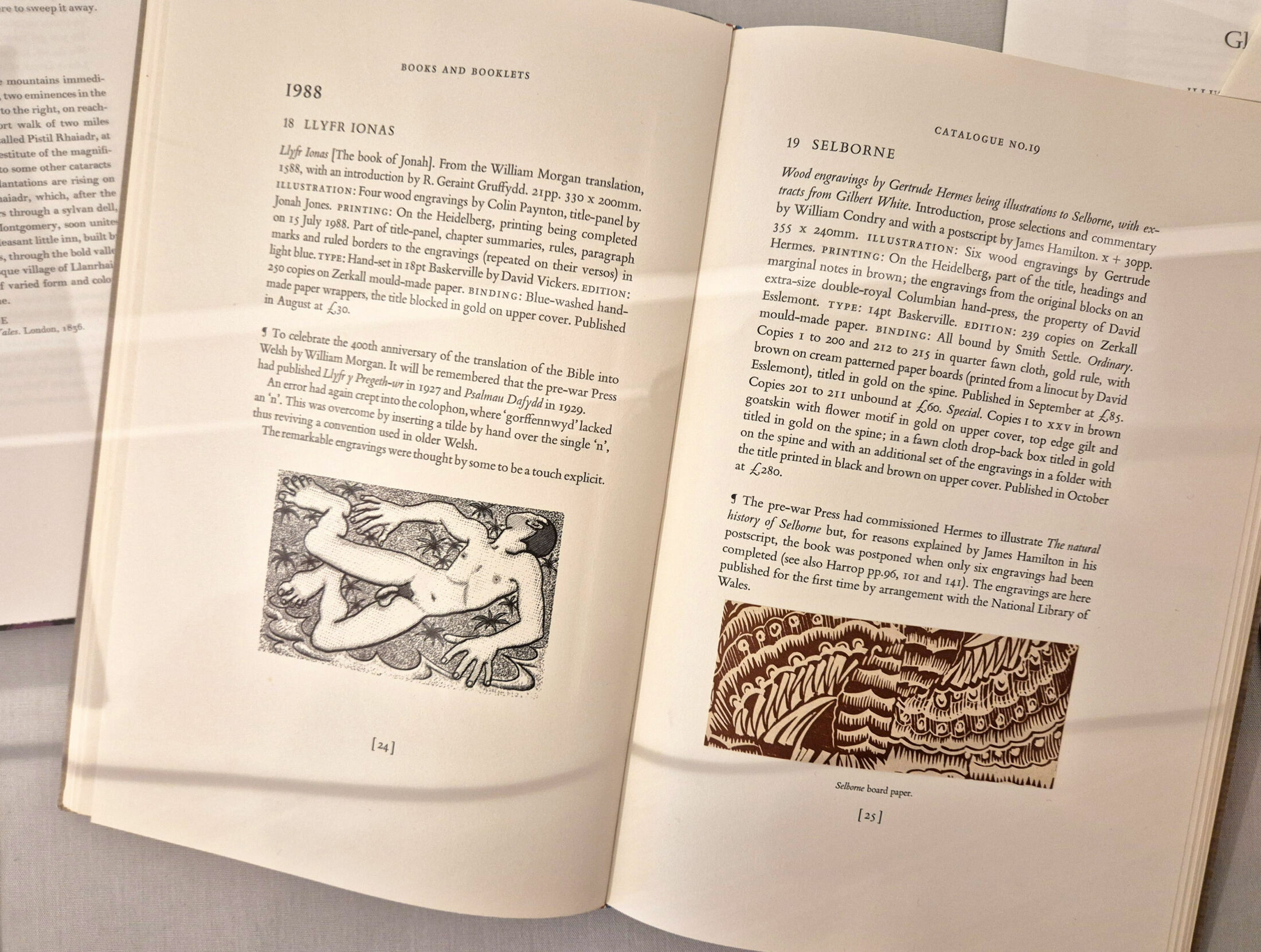
The story of Gwasg Gregynog begins with two remarkable sisters. Gwendoline and Margaret Davies firmly believed that art, literature and craft should be accessible to everyone in Wales. In 1922 they founded the Gregynog Press, which quickly established itself as one of Britain's most celebrated private printing presses. Revived in 1978 as Gwasg Gregynog, today it continues this tradition, producing handcrafted books conceived of as a complete work of art.
Created using traditional letterpress techniques, the printing, illustration, typography and binding are an inseperable process which all occur under one roof at Gregynog Hall. These books are testiment to the excellence that such painstaking care and collaboration affords.
On Display
The books and portfolios shown here highlight the fruitfulness of Gwasg Gregynog's collaboration with artists and writers. The Romantics in Wales pairs an anthology edited by Glyn Tegai Hughes with comissioned wood engravings by Hilary Paynter, while Gwasg Gregynog: A Descriptive Catalogue records the remarkable history and output of the Press on recent years. Together with these accompanying portfolios and ephemera, the care, skill and attention to detail behind every publication is revealed.
Books and ephemera kindly loaned from the personal collection of Steven Whitehouse.
Why Here?
Like the contemporary Artists' Books display opposite, Gwasg Gregynog's publications invite us to think of the book as more than a container for words. They demonstrate how materials, typography, image, sequence and binding can all contribute collectively to meaning. This display celebrates a tradition of bookmaking that continues to evolve and flourish in Wales Today.
This display forms part of CELF Davies, Oriel Davies Gallery’s programme celebrating the extraordinary legacy of Gwendoline and Margaret Davies. Their support for artists, championing of Welsh language and culture, and protection of heritage crafts is well reflected in this celebration of bookmaking.
The gallery is open:
Tuesday - Saturday 10-4
Cafe closes at 4
Except for special events
Closed bank holidays